
At The Australian National University (ANU) Bandalang Studio, relationality is more than a guiding principle - it shapes who the Studio works with and how that work is done.
The Bandalang Studio Residency program is built on relationships and shared learning. It offers funding, dedicated project space, access to ANU services and networks including the libraries, and opportunities for residents to come together to share stories, culture, and knowledge on Ngunawal and Ngambri Country. Beyond the practical support, the program is grounded in connection: creating space for residents to learn with and through one another.
A clear desire to learn with and through each other has emerged, when Indigenous cadet Stacy Swanton undertook an evaluation and monitoring project in 2025 examining the impact of the Studio’s work. Feedback from Indigenous peers, colleagues, and fellows consistently highlighted a key theme: people wanted to hear more about each other’s projects and experiences.
In response, Bandalang Studio started work on a podcast series centred on relational storytelling. Using a relationally-focused editing process, the podcast creates space for residents to yarn about their work, the communities and Countries that ground it, and the relationships that sustain it.
This week, the Studio is proud to launch a new Bandalang podcast series, featuring music by Yuin musician Em Fishpool.
Meet the first Bandalang Fellows on the podcast, and stay tuned for more stories and perspectives of the people who make up the Bandalang Studio community.
Rethinking waterways through listening to Country
'Episode 1: Country knows', with Dr kate harriden
“I often say to people: concreting a stream is like putting your grandmother in a straitjacket. Do you want to put your grandmother in a straitjacket?”
2025 Bandalang Fellow Dr kate harriden is a Wiradyuri water person and scientist. Her work is country-centred and focused on decolonising current western approaches to water management, particularly in streams. A Bandalang Studio adviser, kate is currently leading a project to design a system for potable water delivery to the Tjukurla Community in Western Australia.
Recorded beside Ngunawal waterways, the episode explores why stormwater drains run counter to the principles that historically sustained healthy waterways without concrete infrastructure. Dr harriden also reflects on how all people can have a relationship with Country by learning to listen — and shows listeners what that connection can feel and sound like.
Engineering with Indigenous knowledge systems
'Episode 2: Tjukurrpa is collective', with Dr Elizabeth Marrkilyi Ellis
“I’d like to see engineering students become able to listen to some of this knowledge that we’re giving to them, and develop a sense of inquisitiveness. To be curious and to learn more about Aboriginal people, about Aboriginal Country and about Aboriginal knowledges. Because in that way, it makes you a person who’s open to different ways of working.”
2023 Bandalang Fellow Dr Elizabeth Marrkilyi Ellis is a senior Ngaanyatjarra lore woman, artist, writer, educator, researcher and linguist from the Ngaanyatjarra Lands in the Gibson Desert, Western Australia.
In this episode, Dr Ellis yarns about what it means to engineer and build according to First Nations, – and particularly Ngaanyatjarra – principles. She shares practical examples of how Indigenous knowledges can lead to innovative community and spatial design and offers insights for communities who might be looking to connect with fellow Indigenous spatial designers.
Dr Ellis also shares practical advice for young engineers who might be interested in learning more about Indigenous engineering and design principles, and gives her insights on culture, what it encompasses, and how it shapes the ways people live, work and create together.
Growing Indigenous futures and industries
'Episode 3: Kakadu 300', with Ben Tyler
“I just remember realising one day: why is it that if we want to work or study, we have to leave our community? How do we create a way of staying in our community?”
2025 Bandalang Fellow Ben Tyler is a Bininj man whose homeland is on Murdudjurl Country in Western Arnhem Land. An entrepreneur and transdisciplinary practitioner and researchers, he is the owner and founder of Kakadu Kitchen, a 100 per cent Indigenous-owned bush food business established with a vision to celebrate and share bush tucker traditions and culture with wider audiences.
In the episode, Ben reflects on building a unique, Country and culture-based business – from selling at markets on Larrakia Country in Darwin to partnering with nationally distributed distillers and drink companies.
Ben shares insights into how non-Indigenous people and industries can meaningfully engage with Indigenous people, recognising their expertise and creative engineering food solutions and providing the time, resources, and support needed for projects to grow. He also discusses his vision for Indigenous futures, ways to create food sovereignty, and the importance of creating a community-based industry.
Listen now
The podcast is hosted by ANU Bandalang Studio Manager Nyssa Miller and edited by Dr Rosanna Southerton-Stevens, Visiting Fellow at the ANU School of Culture, History and Language.
Listen now on:
- the Bandalang Studio website
- SoundCloud
- Apple podcasts
- and major podcast platforms.
You may also like

80 YEARS TOGETHER.
Explore our 80th anniversary celebrations and get involved.

Engineering an inclusive community: Speed networking for International Women in Engineering Day
ANU recognises women in engineering through Inclusion, Diversity, Equity and Access (IDEA) initiatives.
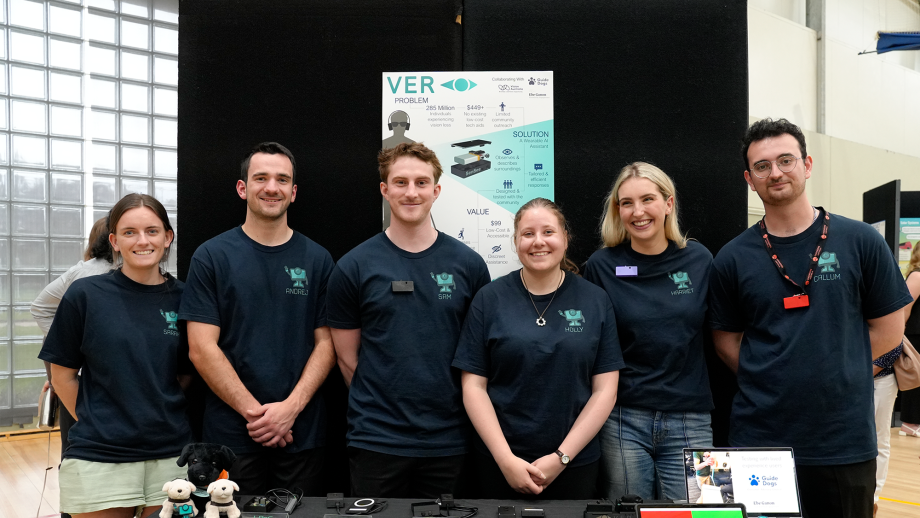
Inclusive engineering: ANU students design wearable tech for the low-vision community
Introducing Project VER, your wearable AI assistant designed to make every day easier for those with visual impairments.