
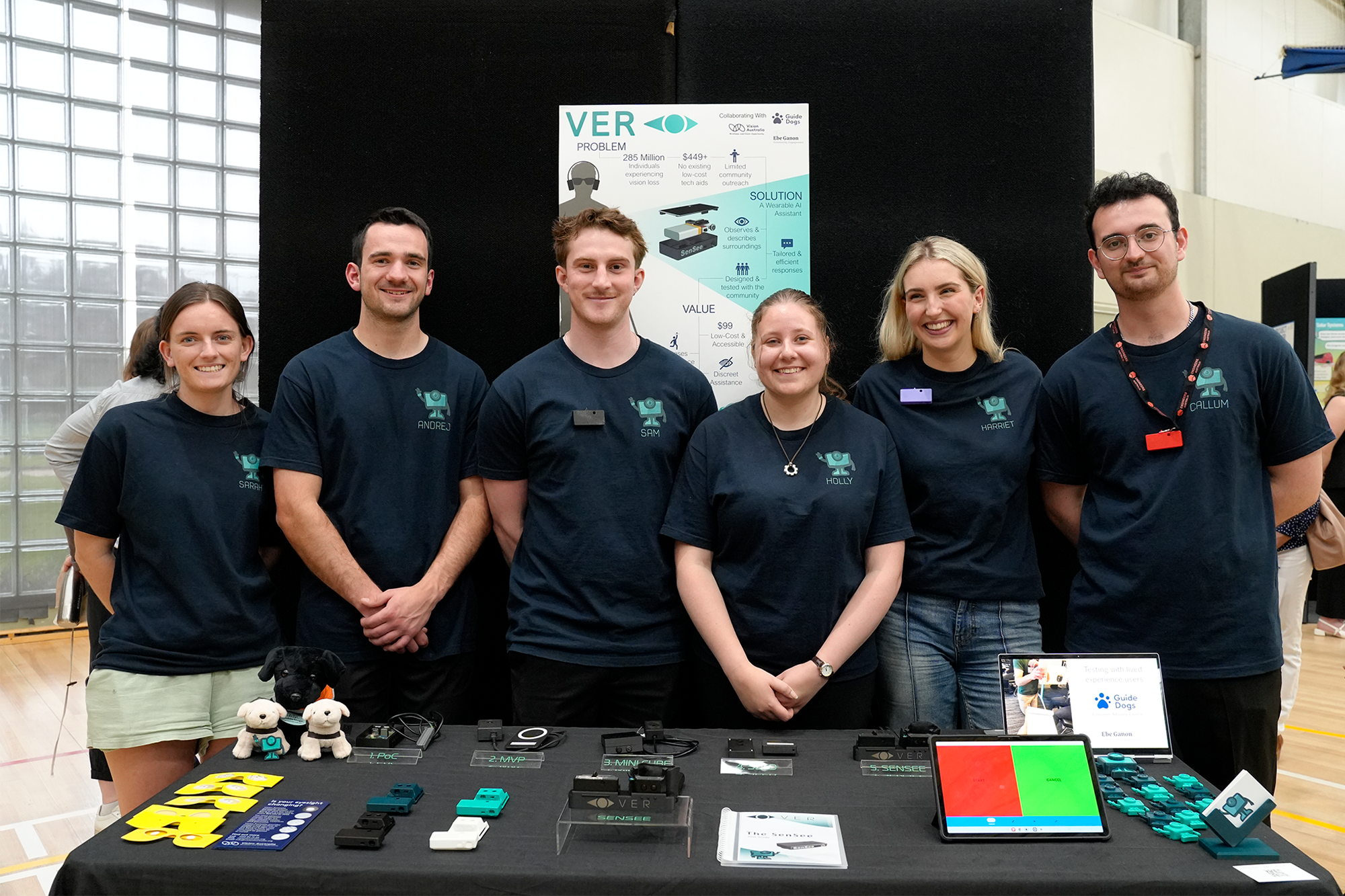
What if navigating the world felt just a little easier, not because the environment changed, but because you had a quiet, intelligent companion helping you make sense of it?
That’s the idea behind Project VER, a Capstone engineering project developed by students at The Australian National University (ANU). The team set out to support greater independence for people living with low to no vision, focusing on the small, everyday challenges that often go unnoticed.
Designed for real people
Project VER began with a simple yet powerful observation.
“Everyday life was not designed with the low-vision community in mind. Countless micro-challenges like locating an unoccupied chair in a busy room or understanding what’s happening in a shared space are what the community faces almost every day,” the team explains.
“We made this device so those everyday moments are a little easier to navigate.”
The device consists of two components: a small wearable unit for the chest and a wristband companion piece. Users can send voice prompts directly to their device. The system answers in real-time, providing immediate and practical support.
The low-vision community members have diverse needs, preferences, and existing support systems. From the outset, the Project VER team recognised this diversity and worked closely with the community they aimed to support.
"We partnered with Guide Dogs Victoria and conducted hands-on testing with members of the low-vision community.”
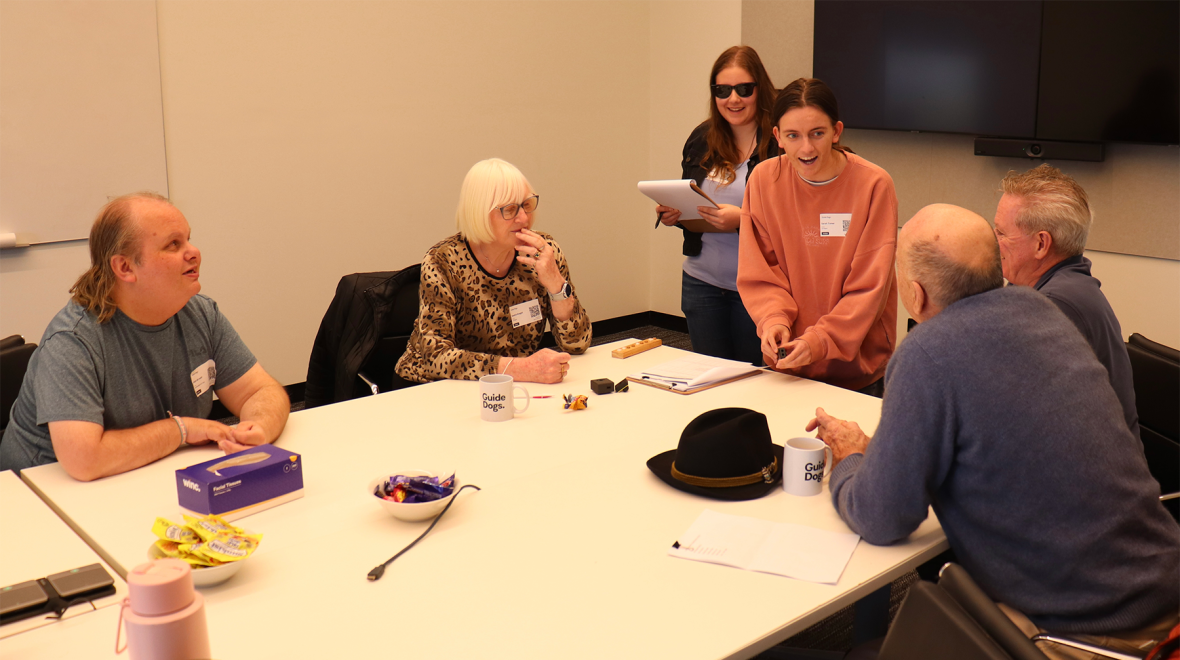
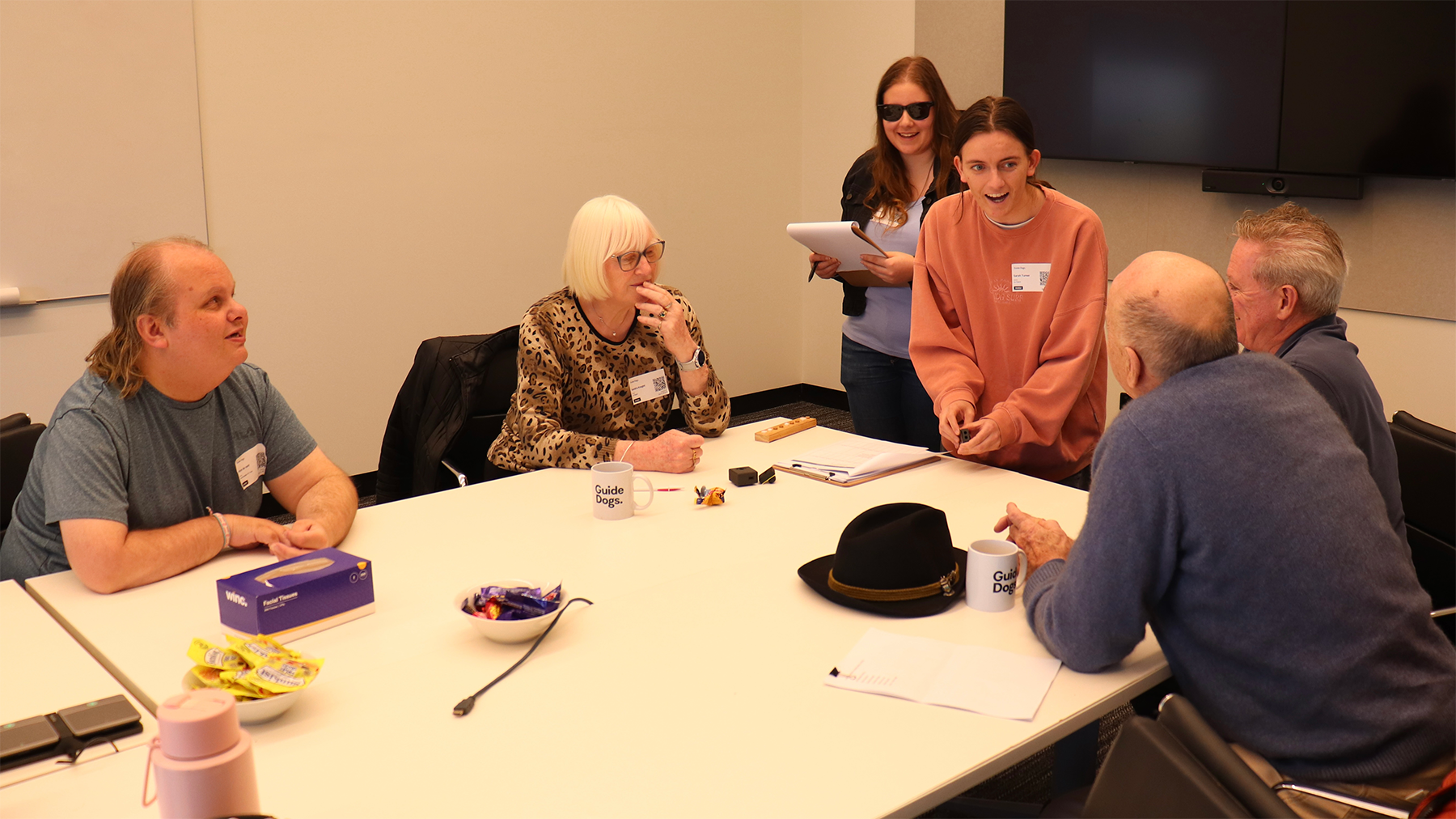
That collaboration led to meaningful design improvements, from adding a lanyard clip for security to exploring textured buttons for easier use.
“The direct feedback really shaped the design in meaningful ways. The technology should fit into the user’s life, not the other way around.”
Inclusive and accessible engineering
Project VER recognises the importance of meaningful accessibility.
“We wanted to make sure people felt included. Instead of designing something for the community, we designed with them.”
When working to make AI assistance available to more people, the team quickly learned there is no single ‘typical’ user in the low-vision community.
“Everyone had varying needs depending on the degree of vision loss, existing aids, daily routines and personal preferences.”
In response, they refined the device prototype from previous Capstone projects to be simpler and more intuitive. They also amended the hardware and tested the app with Android voice readers.
"Project VER isn’t here to replace existing aids, but rather to complement them.”
Another priority, and achievement, for the team, was discretion.
“We wanted to create something that people would actually want to wear. Think of it as an accessory to your existing clothes.”
“When technology feels like an accessory rather than a medical device, it’s more likely to get used. And that’s when it delivers the independence it promises.”
Future VERsions
Looking ahead, the team sees strong potential to further develop the concept.
With more time and resources, they plan to develop a custom-designed PCB (printed circuit board) to make the device even smaller, more tailored, and easier to manufacture at scale.
They also aim to introduce conversational memory, allowing the AI – currently powered by Gemini and Groq – to retain the context of past interactions and refine its responses over time based on user feedback.
“The goal is an assistant that learns, adapts, and grows with the person using it.”


A new standard for engineering
Project VER reflects the kind of human-centred innovation and multidisciplinary approach fostered at the ANU College of Systems and Society. It demonstrates how engineering can move beyond technical problem-solving to create meaningful, real-world impact.
More than a student project, it’s a glimpse of what the next generation of engineers can contribute, and a compelling vision for a more inclusive future.
You may also like

Engineering an inclusive community: Speed networking for International Women in Engineering Day
ANU recognises women in engineering through Inclusion, Diversity, Equity and Access (IDEA) initiatives.

2025 National Indigenous Engineering Autumn School
Indigenous high school students travelled from all corners of the continent to spend a week on Ngunnawal and Ngambri Country for the National Indigenous Engineering Autumn School and learn about the…