
In short:
Which emerging technologies could soon become part of everyday life? ANU expert Professor Katherine Daniell unpacks the innovations attracting global attention, and the questions they raise.
What could change the world over the next five years?
That was the question confronting global leaders from academia, industry and government at the World Economic Forum's ‘Summer Davos’ event in Dalian, China, where Professor Katherine Daniell represented The Australian National University (ANU).
Experts explored the Top 10 Emerging Technologies of 2026 – innovations with the potential to transform healthcare, sustainability, manufacturing, and digital systems.
But these aren't technologies for some distant future. Many have already left the lab and are in commercial use, ready to scale or approaching tipping point from concept to real-world impact.
“The idea is to find emerging technologies that are likely to have a significant impact on larger businesses and society in three to five years’ time,” says Professor Daniell, Director of the ANU School of Cybernetics and member of the WEF Advisory Council for the Top 10 Emerging Technologies report.
One technology that stood out this year is world models; a new type of artificial intelligence (AI) that learns by building internal simulations of the world instead of relying solely on past data.
It could make robots and AI systems much better at understanding and predicting unfamiliar environments and working alongside people. But it also raises new questions.
"There's enormous opportunity to have AI learning in an embodied way,” Professor Daniell says.
“Particularly around social robotics and how humans and machines will work together in complex or even chaotic environments.
"But there's also considerable risk. These systems aren't only learning from past data – they're building simulated worlds. That's something companies, communities, and governments haven't fully thought through yet.
"We saw how quickly generative AI, identified in the 2023 report, became part of everyday life. Thinking through what world models could mean is the one that's going to keep me up at night."
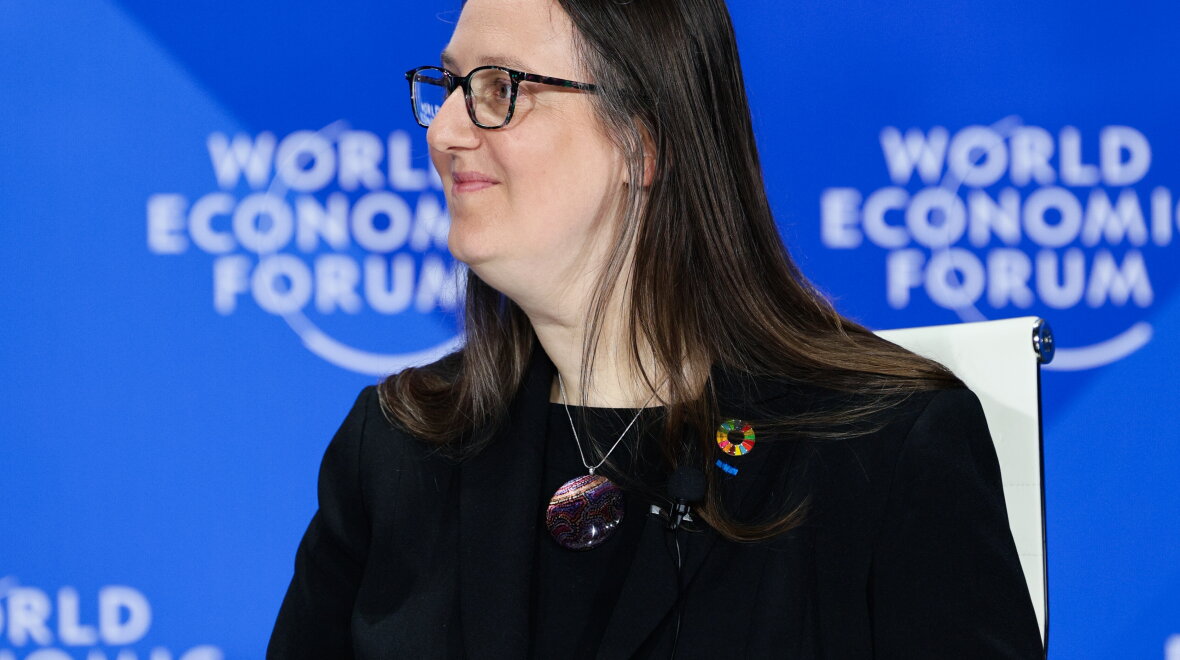

Many of the technologies highlighted this year could also help overcome longstanding geographic and environmental challenges.
One breakthrough that particularly excites Professor Daniell is PFAS destruction.
PFAS (per- and polyfluoroalkyl substances) cause severe environmental issues and pollute water, soil and air around the world. They’re often called ‘forever chemicals’, as they’re incredibly difficult to break down. New technologies are beginning to change that.
“We're now seeing technologies that don't just contain these chemicals, they can destroy the PFAS molecules. Forever chemicals may no longer have to be forever."
She is also hopeful about everything-to-grid energy systems, where intelligent platforms help communities make the most of electric vehicles, batteries, and local renewable energy.
Instead of relying solely on large power stations, communities can increasingly generate, store and share their own electricity.
"We have real potential to create smarter local energy grids," she says.
"We're already seeing this happen in Australia. It's changing how we think about energy production, decarbonisation and electrification." Indeed, ANU has led much globally leading research in this area.
Another technology with global potential is precision fermentation. Professor Daniell says it could transform how proteins, medicines and other essential products are made by shifting production from traditional farming to controlled facilities.
"Food production has traditionally depended on geography. Precision fermentation means biofactories could produce proteins, vaccines and other products much closer to where they're needed."
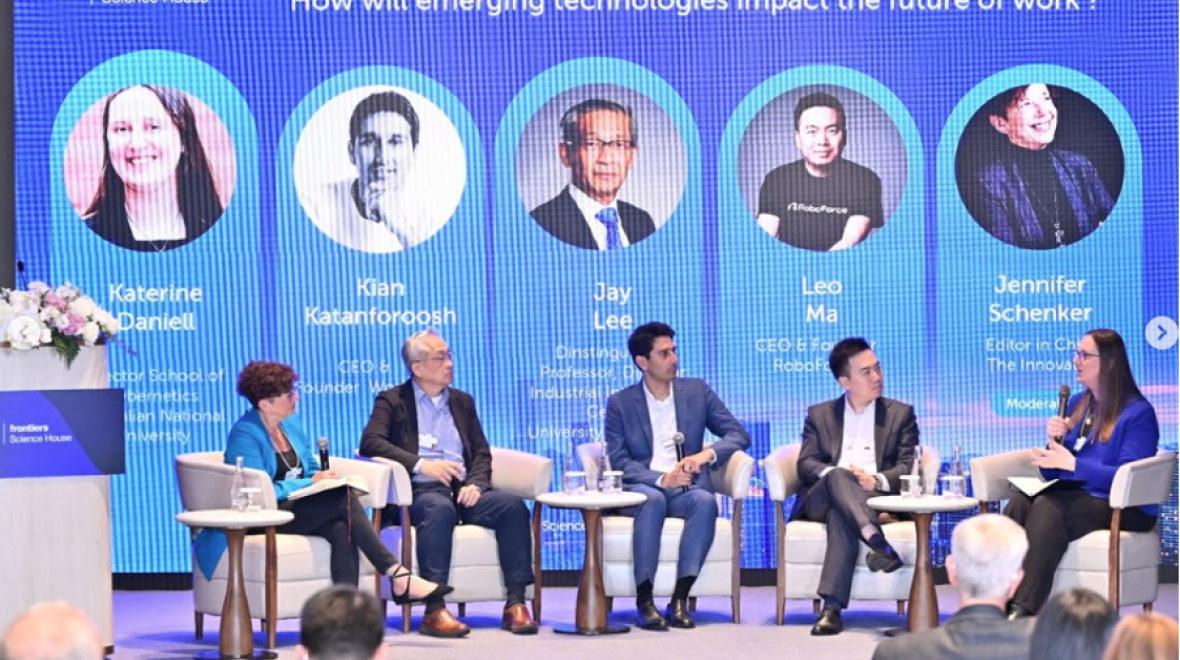
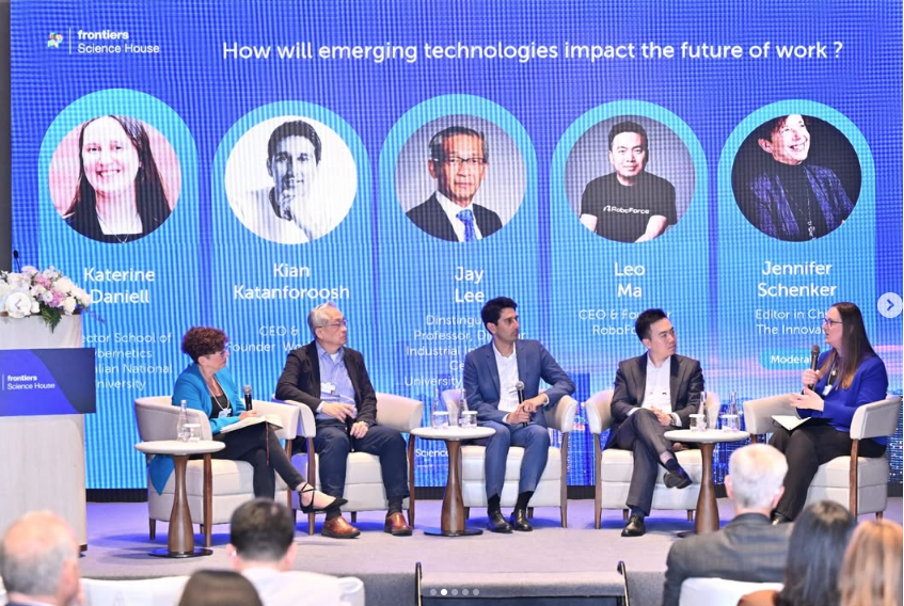
Alongside discussions about the technologies themselves, Professor Daniell joined conversations on how governments, businesses and communities can prepare for the changes they may bring. She also spoke on a panel on The Future of Work, exploring how artificial intelligence and automation are reshaping industries, unlocking human potential and redefining what relationships matter.
Some of these technologies may never become mainstream. Others could become part of everyday life sooner than we expect.
The challenge now is understanding not only what these technologies can do, but how society chooses to develop and use them.
Watch the full discussion on the Top 10 Emerging Technologies of 2026 here.
You may also like

Convergence, trust, technology and cybernetics at the World Economic Forum
ANU expert Professor Katherine Daniell, from the School of Cybernetics, joins the World Economic Forum’s Annual Meeting of the New Champions to talk about emerging technologies.

PhD Spotlight: Kathy Reid
Kathy tells us how cybernetics has guided her as a researcher and where to next once she’s completed her PhD.

The magic of Nao
Meet the little robot painting a big picture of what technology might look like in the future.